
Ask what a piece of furniture is made of and you will hear a lot of words that sound like wood - engineered wood, wood finish, wooden look - and a few that actually are. This is a guide to the second kind: the timbers that make furniture worth keeping, what each is good at, and what to look for when you are choosing.
First, the one rule. Solid hardwood is the material that lasts. It can be sanded, re-oiled and repaired for decades; the alternatives - MDF, particle board and most plywood with a veneer - cannot be, and once the surface is damaged the piece is finished. Everything below is a hardwood, and every one of them will outlast the room.
Teak. The Indian benchmark, and for good reason. Teak is dense, naturally oily and almost indifferent to humidity, termites and rain, which is why it has been used for ships, temples and verandah furniture for centuries. It starts golden-brown and darkens with age. It is the right choice for anything that will see moisture - swings, garden and balcony pieces, bathroom-adjacent storage - and for coastal cities. Its only real drawbacks are price, now that old-growth Burma teak is gone, and weight. Plantation teak from India is the sustainable route, and it is what we use.
Sheesham (Indian rosewood). The wood most Indian solid-wood furniture is made from, and one of the best value hardwoods in the world. Dense, strong, with a rich brown grain streaked with darker lines. It carves well, holds screws well, and takes a dark polish beautifully. It is heavier than teak and moves a little more with the seasons, so it wants proper kiln-drying. Excellent for beds, dining tables, wardrobes and anything that has to carry weight. If a piece is described as 'solid wood' with no species named, it is very likely sheesham.
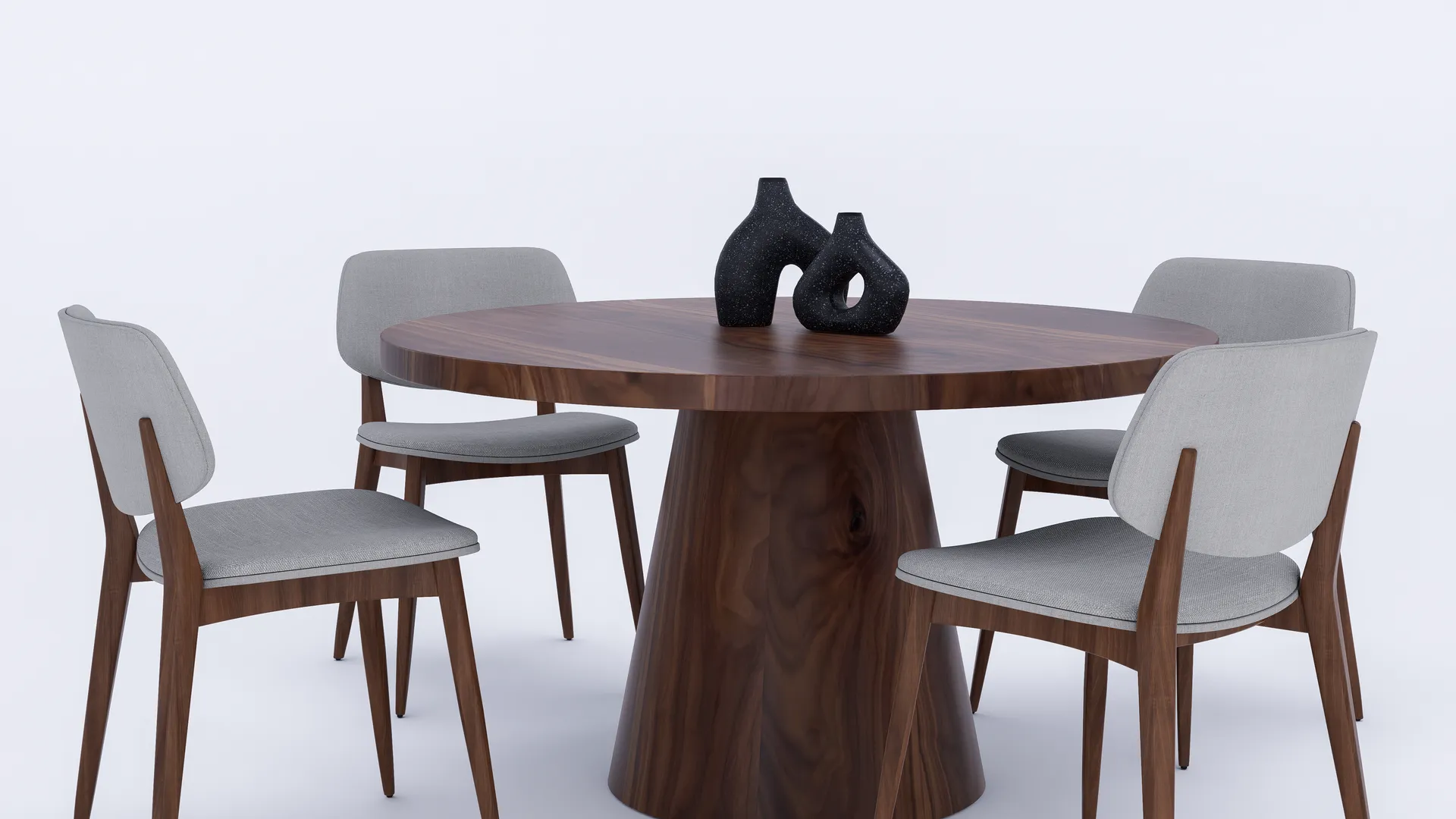
Walnut. The timber premium furniture is built from in most of the world, and our signature. American black walnut is dark chocolate with purple undertones, straight-grained with occasional figure, and unusually stable - it dries well and stays put. It is hard enough for a table top yet workable enough to carve a pedestal or a curved arm. It is also expensive and, like every dark wood, lightens slightly in sunlight. Right for statement pieces: beds, dining tables, chairs, consoles.
Oak. Pale, straight-grained and honest. White oak is hard, water-resistant and takes an oil finish beautifully; red oak is softer and more porous. Oak suits rooms that want to stay light - Scandinavian and Japanese-influenced interiors especially - and reads as background rather than statement. It is a good choice for bedside tables, wardrobes and shelving where you want the wood to be quiet.
Ash. Oak's lighter, springier cousin. Ash is very strong for its weight and bends well under steam, which is why it is used for chairs, tool handles and anything with a curved frame. Pale cream with a bold, open grain. It is less water-resistant than oak, so keep it indoors. Ideal for dining chairs and lighter frames.
Mango. A fast-growing plantation timber and a by-product of the fruit industry, which makes it one of the most sustainable hardwoods available in India. Medium density, with a warm honey colour and sometimes dramatic streaks. It is softer than sheesham or teak - it will dent - but it is affordable and looks good oiled. Fine for coffee tables, sideboards and casual pieces; less so for a dining table that will take forty years of abuse.
Acacia. Often sold as 'Asian walnut' because of its colour, though it is a different tree entirely. Dense, durable and reasonably water-resistant, with a lively grain. A sensible mid-priced choice for dining tables and outdoor furniture. Like mango it needs careful drying, so buy from a maker who kiln-dries.
Maple, beech and birch. The pale, tight-grained Northern hardwoods. Very hard, very smooth, with a fine, even grain that shows little figure. Common in Scandinavian and mid-century furniture. Beech in particular is the classic chair wood. They are less common in India and correspondingly more expensive, but if you want the palest, cleanest look, this is where it comes from.
How to choose. Think about three things. First, where the piece will live: anything near water, sun or an open window wants teak or acacia; anything in a bedroom or dining room can be walnut, sheesham or oak. Second, what it has to carry: a bed or a dining table wants a dense wood - sheesham, walnut, teak, white oak - while a chair can use a springy one like ash. Third, the colour you want the room to be in ten years, not today: walnut and teak deepen, oak and ash barely change, mango warms.
How to read a label. 'Solid wood' should name the species; if it does not, ask. 'Engineered wood' means MDF or particle board. 'Wood veneer' means a thin slice of real timber glued over one of those. 'Kiln-dried' is the phrase you want to see - it means the timber was dried to a stable moisture content before it was cut, and it is the difference between a table that stays flat and one that cups in September. A joint you can see - a tenon, a dovetail - is a good sign; a screw where a joint should be is not.
What we use, and why. Our collection is built in walnut, teak and oak, with cane, stone and brass. Walnut because it is the most beautiful timber we can buy sustainably and it holds a curve; teak because India is humid and swings hang outdoors; oak because some rooms want to stay light. We kiln-dry everything to 8–10% and rest it in the workshop before it is cut. If you would like a piece in sheesham, ash or another timber, ask a design expert - most of the collection can be made in a different wood.